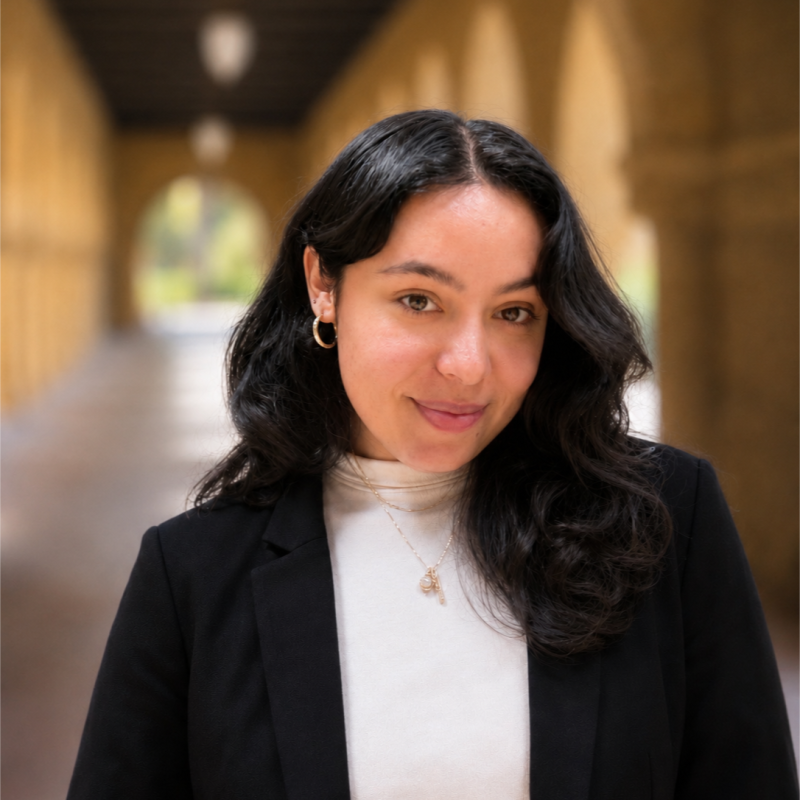
Komal Vij
B.S./M.S. Computer Science (AI)
I work on decision-making under uncertainty, especially personalization, safety, and AI for science.
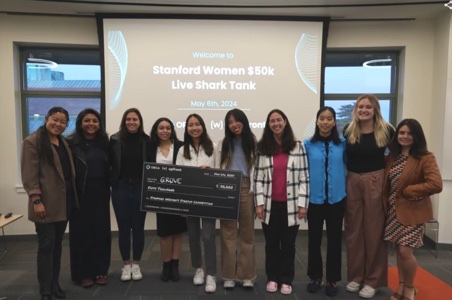
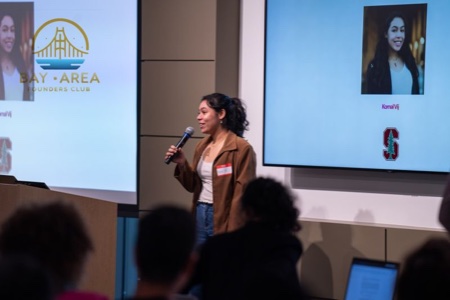
Also love partnerships, and have led them for Stanford WiCS, ASES, Bay Area Founders Club, and fetch.ai.
- Research
- Applied Science
- ML Engineering
- Product Engineering
- Infra

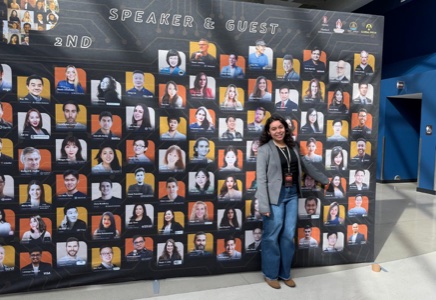
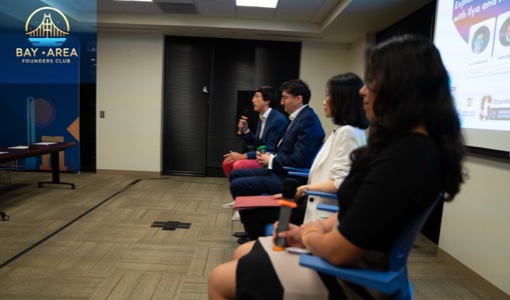
Work

SWE / ML Intern, Uber Eats Personalization
Recommendation systems for Uber Eats personalization.

Full-Stack ML Intern, Uber
On-device ML for rider and driver safety.

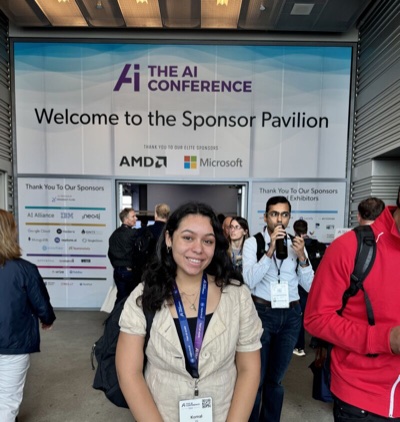
Forward Deployed Engineer Intern, Fetch.ai
Voice agents for onboarding businesses onto Agentverse.

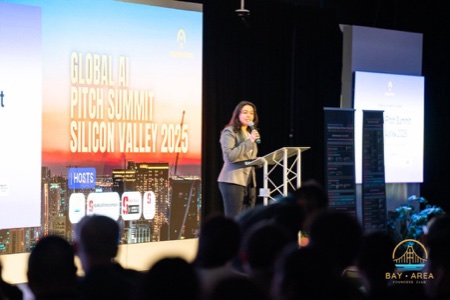
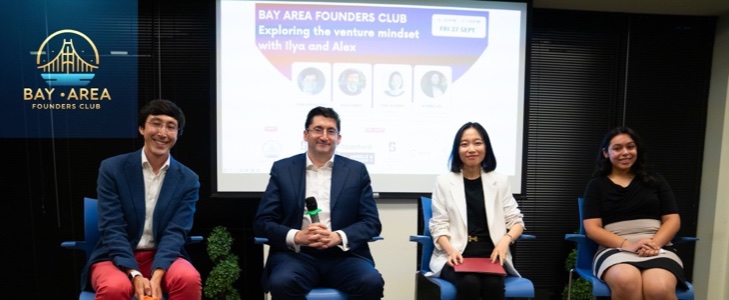
VP of Partnerships, Bay Area Founders Club
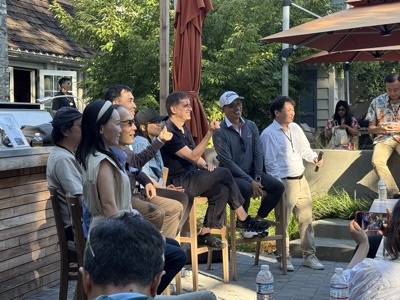
Organized conferences and moderated founder and investor panels.
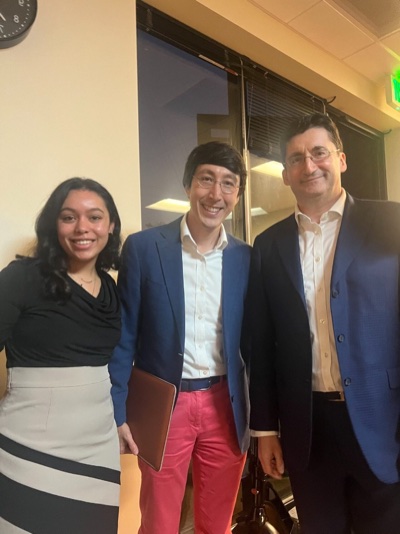
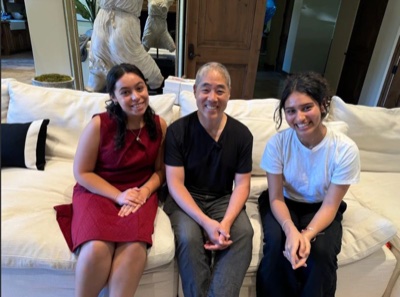
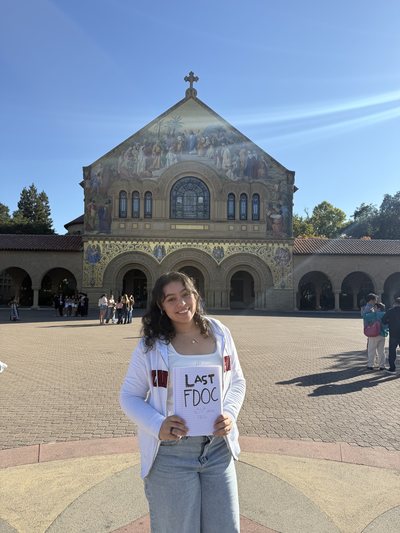
Show 3 photos
Research & Projects
Personalization
T-REX Preference LearningResearch
Investigating whether Trajectory-ranked Reward Extrapolation (T-REX), an inverse RL technique from robotics and game-playing, can recover latent user preferences for recommendation from implicit signals alone, using a custom simulation environment.
- #1 Hackathon Prize, AGI House
MemoryPalaceHackathon
Biomimetic parametric memory system that improves vision-language model spatial reasoning on long-form egocentric video.
Safety
SafeInstructResearch
Adapting Self-Instruct to safety alignment: a constitution-guided pipeline generating 1,800+ verified examples that teach small language models to safely pivot on harmful requests instead of over-refusing or complying. Improved HarmBench redirection by ~14 pp on GPT-Neo 2.7B and ~7 pp on TinyLlama 1.1B while preserving Alpaca helpfulness.
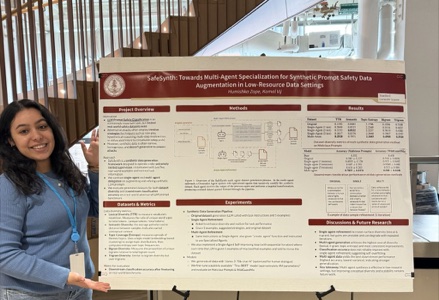
FacadeGuardPoster
Multi-turn impersonation scam detection for social media DMs. A hybrid pipeline (heuristic risk scoring, TF-IDF + logistic regression, deepfake image detection, and a Gemini LLM for uncertain cases) matches LLM accuracy at 60% lower cost and ~1 ms median latency, with a moderator dashboard whose decisions feed back into the classifiers.
Essay on Narayanan and Kapoor’s AI Snake Oil, examining how to separate real AI advances from inflated claims and why both predictive and generative AI have inherent limits.
AI for Science
Reinforcement Learning for Drug DiscoveryPresentation
Reinforcement learning framework using DQN for siRNA sequence optimization.
GREEN SCREENPaper
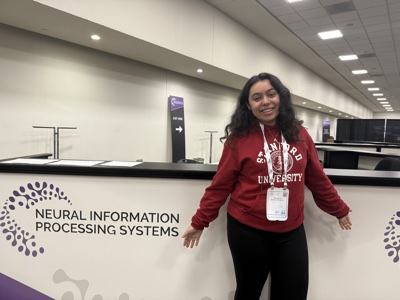
Automatic accessible presentation generation from IPCC reports. Published at the Tackling Climate Change with Machine Learning workshop.
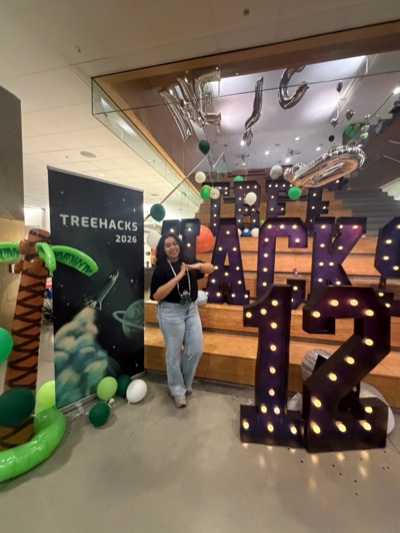
- #1 Hackathon Prize, TreeHacks Ecopreneurship Track
ZoneZeroHackathon
Geospatial environmental analysis tool using Google Earth Engine and Maps data to generate a Zone Zero wildfire-compliance report for any address.
Show photo
Speaking
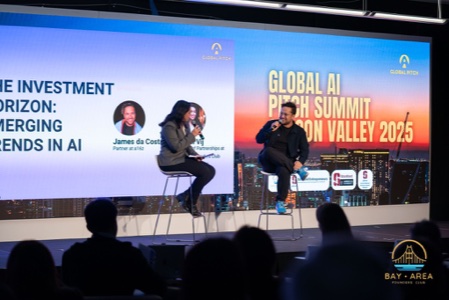
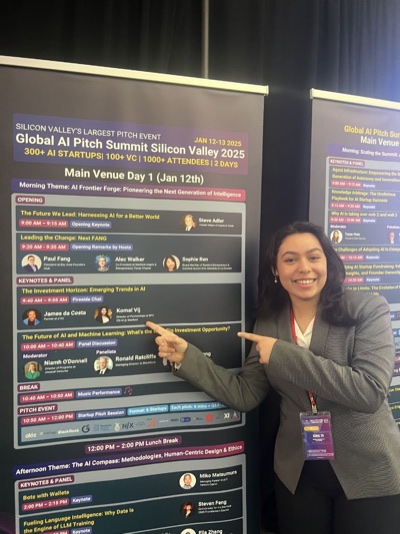
The Investment Horizon
Fireside on emerging trends in AI investing.
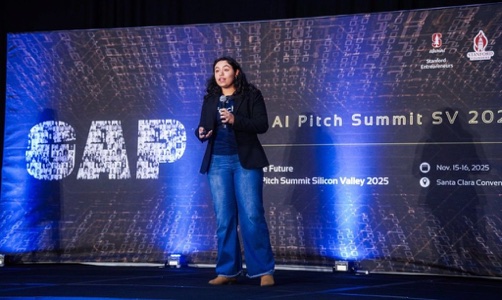
HeyBoss AI
Leadership & Extracurriculars
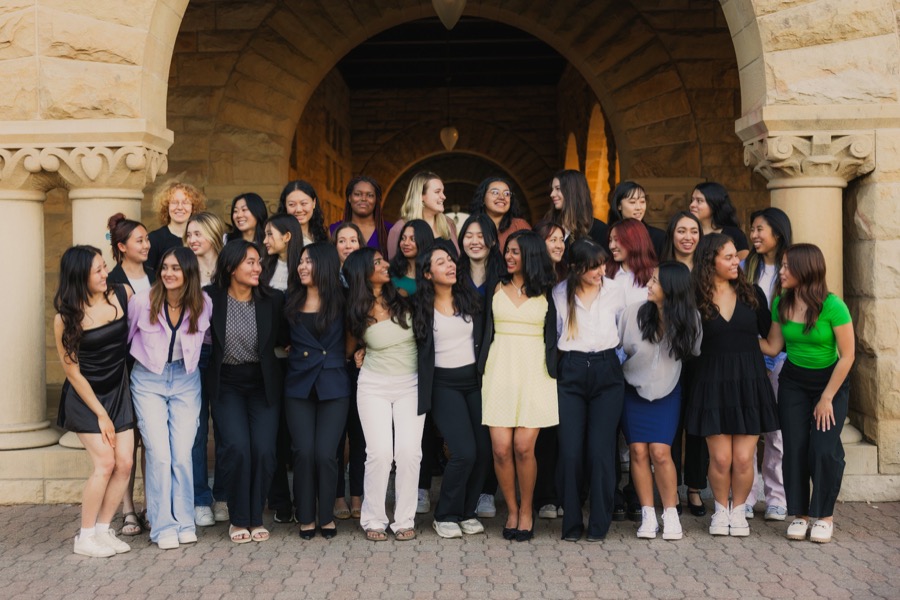
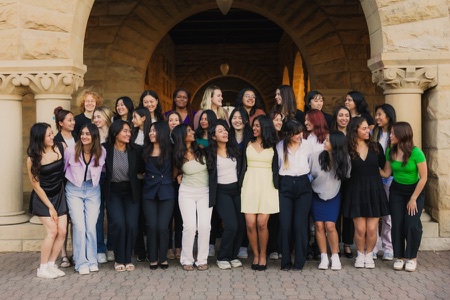
Stanford Women in Computer Science
Lead sponsor partnerships with Google, OpenAI, Uber, HRT, Bloomberg, and more, and have organized 60+ events on campus with partners.

Stanford Entrepreneurship Society (ASES)
Selected into a highly competitive Bootcamp cohort (~8% acceptance) and pitched a startup to a panel of 20 VCs, including the CTO of Dropbox.

Stanford Computer Forum
Represent the Computer Forum, connecting Stanford students and faculty with industry partners.